


BloombergNEF expects India to be selling more than 4.5 million (45 lakh) electric two-wheelers a year by 2030, but its India Electric Vehicle Outlook 2026, reported on November 23, finds that only three-wheelers will hit India's 2030 electrification targets. Two-wheelers, passenger vehicles and commercial vehicles all fall short in the research firm's Economic Transition Scenario.123
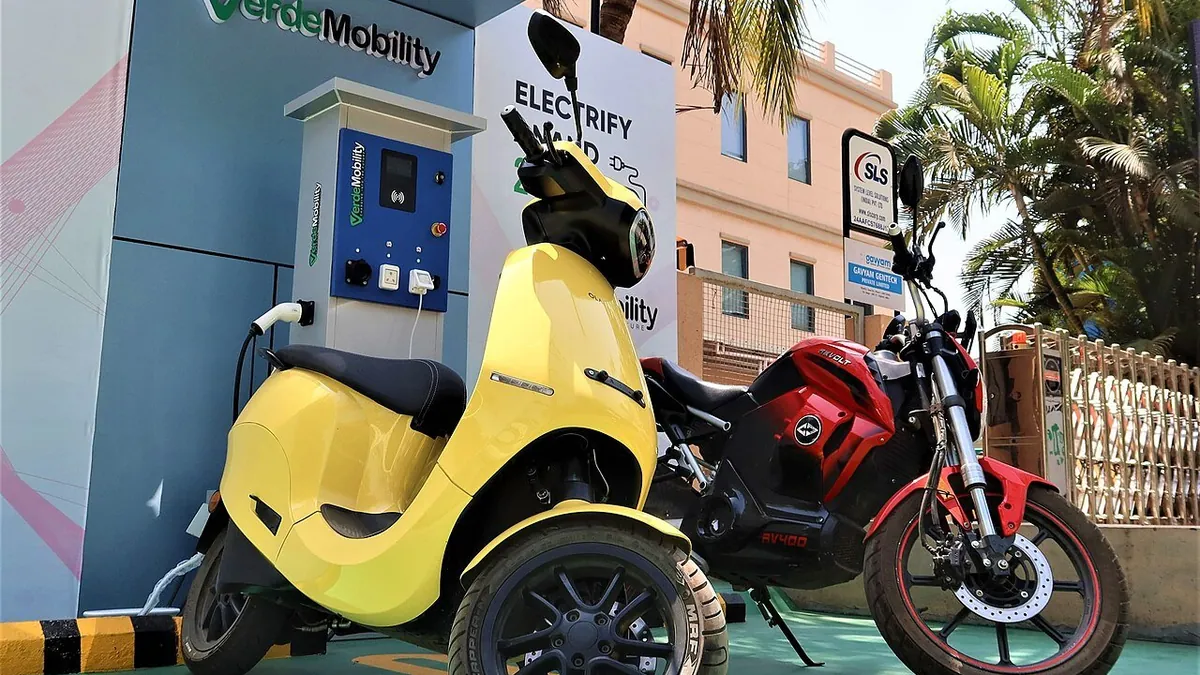
Nearly one two-wheeler in ten sold between January and October 2026 was electric, a share of 9.4%, according to BNEF. Growth so far has come mostly from scooters. BNEF said electric motorcycles have been slow to catch on, and that it expects this weak uptake to limit how far the segment as a whole can grow. By 2040, BNEF reckons almost a quarter (23%) of the two-wheelers on India's roads will be electric, with yearly sales of 13.2 million. Higher fuel prices since the Iran war broke out have also lifted e-two-wheeler demand, BNEF said.12
Across all vehicle types, BNEF counts 2.9 million EVs sold in the first 10 months of 2026. The 2025 total was a little over 2.4 million, after growth of 17% that year. BNEF sees cheaper batteries driving faster adoption after 2030; until then, low running costs, lower-priced models and more public chargers carry growth.12
For cars, BNEF expects electric sales to top 3,05,000 units in 2026 and reach about 6,20,800, or 10.2% of car sales, in 2030. Medium and heavy commercial vehicles are slowest: BNEF puts EVs at 1.5% of medium and heavy commercial vehicle sales in 2030.12
On charging, BNEF puts EV electricity demand at more than 96 TWh by 2040, about 6.8% of India's total. Charging that fleet would take more than 8.7 million connectors and roughly $29 billion of investment by 2040 under the Economic Transition Scenario, BNEF estimates, with the exact count depending on how people charge. It expects road fuel demand to peak in 2034, as savings from electrified scooters, autos and cars outweigh rising fuel use by commercial vehicles.12